Skills Gaming Policy Changes on Second Life
07/17/2014 12:43 Filed in: Gaming
Last week, Linden Research changed its policy on skills games in the Second Life® virtual world. Now, game creators and game operators can obtain a license to offer games and to operate games in Second Life. Players, region owners, creators, and game operators must make certain representations to Linden. Since the new policy was announced, we have been helping game creators and operators to obtain licenses. Before that, we were advising operators on how to avoid violations of U.S. federal and state law, as required by Linden. Read More...
|
Augmented Reality Opportunities
02/02/2014 18:52 Filed in: Augmented Reality
While the virtual reality market seems to be quiet, the augmented reality is starting to grow. With Google Glass and new competitors on the horizon, people are turning to wearable computers. Wearable computers in the form factor of glasses give users the ability to see additional information about the real life environment around them. Read More...
New California Law Will Change Video Game and Virtual Worlds Privacy Practices
09/29/2013 18:17 Filed in: Privacy
This past week, on September 23, 2013, California Governor Jerry Brown signed Senate Bill 568, legislation enacted to protect minors online. The law is most famous for providing a so-called “Internet eraser” mechanism. The idea of this law is to give minors a chance to remove content that they regret posting later. The law also bars online services from advertising certain adult products, including alcohol, tobacco, and firearms. Click here for a copy of the new law. Read More...
What Name Should We Choose for Our Game?
08/27/2013 10:09 Filed in: Trademark
One common question that game developers may come across is how to choose a good name for a game. Marketing professionals may have a perspective on choosing good names, such as selecting a memorable name, finding a name that gives consumers a clear idea what the game is about, and including a key word. A few years back, for instance, it seemed everyone was creating game titles with “Zombie” in the name. Read More...
Privacy Policy Topics
07/26/2013 21:08 Filed in: Privacy
Let’s say that you are developing a privacy policy for your company. What kinds of topics do you need to cover? And where do you get ideas on what to say? Read More...
Delta Prevails in Privacy Lawsuit
06/22/2013 14:40 Filed in: Privacy
I have been writing about the California Attorney General’s mobile app privacy lawsuit against Delta Airlines. The A.G. had complained that Delta failed to have a privacy policy for its mobile app. Last month, Delta prevailed in the suit, and the Court dismissed the A.G.’s complaint against it with prejudice, which means the A.G. can’t simply amend her complaint. More specifically, the Court sustained Delta’s “demurrer” in an order that dismissed the A.G.’s complaint. For a copy of the order, click here. Read More...
Washington Lawyer Article on Virtual Worlds and MMOGs
05/20/2013 14:59 Filed in: General
Recently, writer Thai Phi Le wrote a Washington Lawyer magazine article entitled “Virtual Reality Meets Real-Life Law.” She interviewed me and other lawyers who practice in the area to write a thorough article on different real-life legal issues surrounding virtual worlds and massively multiplayer online games. I commend her article to you, which you can view here. Read More...
Virtual Worlds Research Jornal Review
04/10/2013 12:12 Filed in: Academia
Today, I came across a new resource for looking at virtual worlds: Virtual Worlds Research. This is an online, peer-reviewed academic journal. The journal can be found here. Read More...
Delta Seeks Dismissal of California AG Suit
03/09/2013 12:50 Filed in: Privacy
In my last post about the mobile app privacy lawsuit by California’s Attorney General against Delta Airlines, I talked about the recently filed complaint in San Francisco’s Superior Court. The AG claimed that Delta Airlines violated California’s Online Privacy Protection Act by offering a mobile app, Fly Delta, that does not have a privacy policy. For a copy of the complaint, click here. Delta is now seeking dismissal of the claims in the complaint. Read More...
Evans v. Linden Class Certified
01/13/2013 19:50 Filed in: Virtual Goods
The Evans v. Linden Research case finally generated some interesting results in late 2012, resulting in the certification of a subclass of plaintiffs and a court filing stating that the parties are planning on mediating the dispute on January 21, 2013. As part of the Court’s ruling, the order certifying the subclass held that the plaintiffs did not have standing to pursue claims on behalf of the main class of plaintiffs, which the Court said could encompass anyone who ever bought or sold virtual real or personal property on Second Life. Accordingly, the Court took a dim view of the main claims on behalf of the vast majority of plaintiffs and left the plaintiffs with only a small victory in a case that looks much smaller than the one they envisioned. Click here for a copy of the Court’s certification order. Read More...
California Attorney General Sues Delta Citing Lack of Privacy Policy on Mobile App
12/11/2012 13:22 Filed in: Privacy
I have now written two posts -- one on October 7 and one on November 6 urging developers of mobile apps to develop and implement a privacy policy, with a supporting privacy program. At the end of October, California Attorney General Kamala Harris sent letters notifying mobile app developers that they must post their privacy policies or face enforcement actions under California’s Online Privacy Protection Act (OPPA) of 2003, which requires commercial websites or online services that obtain personally identifiable information about California consumers to post their privacy policies. On December 6, Harris filed a lawsuit in San Francisco’s Superior Court alleging that Delta Airlines failed to heed her warning and does not have a privacy policy for its mobile app Fly Delta. For a copy of the complaint, click here. Read More...
California Attorney General Warns Apps Developers to Post Privacy Policies
11/06/2012 14:12 Filed in: Privacy
On October 7, I wrote that developers of mobile apps should create, maintain, and update their privacy policies, and make sure their policies match their information practices. I cited California’s Online Privacy Protection Act (OPPA) of 2003, which requires commercial websites or online services that obtain personally identifiable information about California consumers to post their privacy policies. On October 30, California Attorney General Kamala Harris weighed in on this same issue by sending out a press release saying that she had begun notifying apps developers to post their privacy policies, citing Cal. OPPA. For a copy of the press release, click here. Read More...
Don't Forget Your App's Privacy Policy
10/07/2012 18:55 Filed in: Privacy
Last week, I gave a presentation on data breaches at the Online Trust Alliance’s Online Trust Forum 2012 in San Jose. It was a great program about mobile commerce, privacy, security, and brand protection. During the conference, one of the speakers talked about how an informal study of mobile apps showed that many apps companies do not have privacy policies. Even worse, only a small percentage of the companies have privacy policies that accurately reflect their actual practices in collecting, using, and sharing information. Companies without a privacy policy or without an accurate one are creating legal risk for themselves. Read More...
Blingville v. Zynga Settled
09/11/2012 07:58 Filed in: Contracts
I have been following the Blingville v. Zynga defensive suit here, here, and here, in which Blingville, LLC filed suit against Zynga in the Northern District of West Virginia. Blingville sought to stave off Zynga’s claims of trademark infringement by contending that its use of the mark BLINGVILLE for a game does not violate Zynga’s trademark rights. After checking the docket, I can see that the month after I last checked in with the case, the case settled, and the resulting consent judgment shows that Zynga achieved its goal of stopping Blingville, although Zynga did not extract any money from Blingville as a result of the case. For a copy of the consent judgment, click here. Read More...
Electronic Arts Sues Zynga for Copyright Infringement
08/16/2012 15:28 Filed in: Copyright | Intellectual Property
Earlier this month, Electronic Arts sued Zynga for copyright infringement in the United States District Court for the Northern District of California. The case concerns EA’s online game called “The Sims Social,” which is offered on the Facebook platform. Zynga has a competing Facebook game called “The Ville.” EA alleges that the The Ville is a clone of The Sims Social. EA’s complaint alleges only a single claim -- copyright infringement. For a copy of the complaint, click here. Read More...
Five Key Goals in Video Game or Virtual World Contracts
06/30/2012 17:48 Filed in: Contracts
Let’s say that your business is hiring an independent programmer to help create your video game or create virtual products in a virtual world. What are the five key things your contract should accomplish? Read More...
Video Game Addiction Case Closed
05/30/2012 22:07 Filed in: Addiction | Metagaming
Whatever happened to the video game addiction case I wrote about in 2010? The case was Smallwood v. NCsoft Corporation, No. 09-00497 ACK-BMK (D. Haw.). In the suit, Smallwood said that he became psychologically dependent on and addicted to NCsoft’s Lineage II game. Last November, the Court abruptly dismissed the case following a final pretrial status and settlement conference. Although the docket doesn’t say it, the most likely interpretation of the dismissal is that the parties settled the case before trial. Read More...
Blingville v. Zynga in Discovery
04/13/2012 12:48
I wrote last year here and here about Blingville, LLC filing and pursuing a preemptive suit against Zynga in the Northern District of West Virginia. In its suit, Blingville contends that its use of the mark BLINGVILLE for a game does not violate Zynga’s trademark rights. A review of the docket this year shows that the parties are in discovery seeking written information from each other, and Zynga apparently obtained the testimony of a representative of Blingville in a deposition. Read More...
MegaUpload Case-DOJ Seeks to Stop File Sharing Service
Last month, in January 2012, the government indicted MegaUpload, a file storage service, and its operators, including a man who named himself Kim Dotcom, for alleged copyright infringement and money laundering on a massive scale. In the indictment filed in the U.S. District Court for the Eastern District of Virginia, the government contended that people were uploading massive amounts of copyrighted content without authorization and that the company and its operators were making millions from premium memberships and online advertising. The government also alleged that the company paid and encouraged people to upload copyrighted content. Read More...
2011 Case of the Year: Brown v. Entertainment Merchants Association
01/10/2012 16:59 Filed in: Government Regulation
Now that we have reached the new year, lawyers and bar associations are rolling out their programs reviewing developments in the law in 2011. I am no exception, because I am a panelist for the “Hot Topics in Business and Technology Law – 2011” program for the Santa Clara County Bar Association (in San Jose, California). As part of my appraisal of 2011, I am in the process of reviewing legislative and case law developments in California and at the federal level.
In that spirit, I believe the case of the year for the 3D Internet is Brown v. Entertainment Merchants Association, a case issued by the U.S. Supreme Court on June 27, 2011. Given how unusual it is for the U.S. Supreme Court to take up a case having to do with video games, the Court’s decision makes for an obvious 2011 case of the year for the video game industry. In Brown, the Court held that that California’s state law limiting the sale of violent video games violated the First Amendment and affirmed an injunction against any enforcement of the law. For a copy of the Court’s opinion, click here.
Read More...
In that spirit, I believe the case of the year for the 3D Internet is Brown v. Entertainment Merchants Association, a case issued by the U.S. Supreme Court on June 27, 2011. Given how unusual it is for the U.S. Supreme Court to take up a case having to do with video games, the Court’s decision makes for an obvious 2011 case of the year for the video game industry. In Brown, the Court held that that California’s state law limiting the sale of violent video games violated the First Amendment and affirmed an injunction against any enforcement of the law. For a copy of the Court’s opinion, click here.
Read More...
Bethesda Softworks Loses Fallout Case
12/11/2011 21:22 Filed in: Copyright | Intellectual Property
It isn’t very often that a video game case ends up in a decision of a federal appellate court. So, I read with some interest the recent (unpublished) decision in Bethesda Softworks, L.L.C. v. Interplay Entertainment Corp., No. 11-1860, 2011 WL 5084587 (4th Cir. Oct. 26, 2011) (per curiam). Bethesda had feuded with Interplay concerning trademark issues in a couple of federal district court opinions. The appellate decision, however, concerned Bethesda’s copyright claims against Interplay. Bethesda had sought a preliminary injunction against Interplay, lost in the district court, and took an immediate appeal. The court of appeals affirmed. The court of appeals’ decision concerned the standard for preliminary injunctive relief and emphasized that irreparable harm to the copyright owner cannot be presumed merely because of a likelihood of success on the merits. Read More...
Evans v. Linden Virtual Worlds Case Continues On
10/31/2011 07:26 Filed in: Virtual Goods
I am continuing to follow the Evans v. Linden case, which was transferred from the U.S. District Court for the Eastern District of Pennsylvania to the U.S. District Court for the Northern District of California. The case concerns the conduct of Linden Research inc., which operates the Second Life® virtual world. The plaintiffs had claimed that Linden wrongfully deprived them of their virtual real property. A review of the docket and the latest scheduling order shows the case is continuing and evidently is in the discovery phase of evidence gathering in anticipation of a motion to certify a class of plaintiffs and eventual trial. Read More...
Blingville v. Zynga Update
09/28/2011 22:12 Filed in: Intellectual Property | Trademark
In January, a company called Blingville, LLC filed a preemptive suit against Zynga in the Northern District of West Virginia. Blingville filed the suit as a defensive move to claim that its use of the mark BLINGVILLE for a game does not violate Zynga’s trademark rights. I wrote about the complaint earlier this year. What has happened to the case since the complaint? Not a whole lot has occurred, although some recent filings shed light on the status of the case. Right now, the parties are in the discovery process of gathering and exchanging information. The parties anticipate the case will be ready for trial in June 2012. Read More...
American Bar Association Virtual Worlds and Multi-User Online Games Committee Starts Its New Year
08/17/2011 09:49 Filed in: VWMOG
This month, the Virtual Worlds and Multi-User Online Games Committee of the American Bar Association (ABA) Section of Science & Technology Law is starting its new year. If you are not familiar with the VWMOG Committee, its mission is “To provide legal analysis, discussion, and education of issues presented by virtual world environments and multi-user online games.” ABA bar groups have an annual calendar revolving around the ABA Annual Meeting in early August or late July each year. Accordingly, the VWMOG’s new “bar year” is just underway.
Read More...
Read More...
Evans v. Linden Update
06/05/2011 15:12 Filed in: Virtual Goods
Last year, I wrote about the Evans v. Linden case filed in the Eastern District of Pennsylvania. Linden operates the Second Life® virtual world. The case concerned claims that Linden wrongfully deprived the plaintiffs of their virtual real property. I recently checked into the status of the case. In February, the Philadelphia federal court enforced Linden’s forum selection clause and transferred the case to the Northern District of California. Since then, the case has proceeded in San Francisco’s federal court. Read More...
Eros v. Linden - Case Closed
Without much fanfare, the Eros v. Linden Research case closed quietly in March 2011. Two named plaintiffs filed this putative class action, Eros, LLC and Shannon Grei, both of whom offer products on the Second Life® virtual world. The plaintiffs contended that Linden Research did not do enough to protect their intellectual property rights, and in fact had profited from infringements. In March, Eros and Grei both filed stipulated dismissals of their claims with prejudice, which means that they cannot later refile their action. Apparently, the parties entered into a settlement, and the plaintiffs dismissed their action in carrying out the settlement. Read More...
Apple Files Suit Against Amazon Over APP STORE Mark
04/15/2011 17:34 Filed in: Intellectual Property | Trademark
In March 2011, Apple filed a trademark infringement lawsuit against Amazon, claiming that Amazon is infringing on Apple’s APP STORE mark. Apple alleges that Amazon is in the process of launching its own application store using the APP STORE mark. Apple’s complaint, filed in the U.S. District Court for the Northern District of California, states that it is seeking preliminary and permanent injunctive relief, as well as damages. Read More...
When Do Violations of Terms of Use Give Rise to a Software Copyright Claim?
03/17/2011 18:47 Filed in: Intellectual Property | Copyright
Last December, the Ninth Circuit decided MDY Industries, LLC v. Blizzard Entertainment, Inc., which discussed, among other things, the circumstances under which a user’s violation of an online software application company’s terms of service can constitute copyright infringement. In February, the court amended its opinion by adding a footnote. 628 F.3d 928 (9th Cir. 2010), amended and superseded and reh’g denied, 2011 WL 538748 (9th Cir. Feb. 17, 2011). For a copy of the amended opinion, click here.
Read More...
Read More...
Transitioning User Accounts Under User Estate Plans
02/19/2011 19:04 Filed in: Estate Planning
Last April, I wrote a post about how users of online services, including virtual worlds, can plan for their own death or disability through appropriate estate planning mechanisms. The flip side of users planning for the continuity (or deletion) of their accounts holding their online assets is service providers planning for users’ death or disability. Service providers may receive inquiries from relatives of users that have died or become disabled. They may also receive inquiries from agents and representatives purporting to act on behalf of disabled or deceased users. How should service providers plan for users’ death or disability? Read More...
Blingville FIles Preemptive Suit Against Zynga
01/24/2011 19:54 Filed in: Intellectual Property | Trademark
After receiving three cease and desist letters from FarmVille maker Zynga Inc., game maker Blingville, LLC filed a preemptive suit against Zynga in federal court in West Virginia on January 14, 2011. Zynga’s letters took the position that the company had trademark rights in the suffix “ville” when used with game names. Zynga’s games include not only FarmVille, but also CityVille, FishVille, FrontierVille, PetVille, and YoVille. Blingville seeks a declaration that its BLINGVILLE mark does not constitute trademark infringement. For a copy of the complaint, click here. Read More...
The Price of Piracy
12/08/2010 17:46 Filed in: Intellectual Property | Copyright
The price of a little piracy can be rather steep, as proved in a recent California case. Blizzard Entertainment recently won an $88.5 million judgment against a woman running a business called Scapegaming that allowed players to play Blizzard’s World of Warcraft game without paying for it. Blizzard obtained the judgment in September in a case entitled Blizzard Entertainment, Inc. v. Alyson Reeves, d/b/a Scapegaming, No. CV 09-7621 SVW (AJWx), pending in the United States District Court for the Central District of California. For a copy of the order fixing the amount of damages, click here. For a copy of the judgment, click here. Read More...
Case Based on Addiction to a Video Game
11/15/2010 13:58 Filed in: Addiction | Metagaming
Users of video games and virtual worlds joke about how addictive they can be. Few users, however, have thought about suing the game company for creating such an enjoyable playing environment that the game or world actually becomes addictive in an unhealthy way. Yet, that is exactly what a Hawaii resident named Craig Smallwood did. In a case entitled Smallwood v. NCsoft Corporation, No. 09-00497 ACK-BMK (D. Haw.), Mr. Smallwood claimed that he became psychologically dependent on and addicted to NCsoft’s Lineage II. In a decision issued in August, the federal district court in Hawaii permitted Mr. Smallwood’s case to move forward. For a copy of the court’s decision, click here. Read More...
Playfish v. Rackspace Case Dismissed
Back in September 2009, Playfish, Ltd., since acquired by Electronic Arts, sued San Antonio-based hosting company Rackspace Hosting, Inc. and GosuMall Digital Entertainment, a Singapore company, alleging that GosuMall was selling trademarked in-game items from Playfish's Pet Society game, in violation of Playfish's Terms of Service. Over the summer, the Court dismissed the case for plaintiff’s failure to pursue the suit. Read More...
Eros v. Linden Research Update
The Eros v. Linden Research case has been quiet over the summer, with few filings. The most important recent development in the case concerns the status of the case as a class action. The plaintiffs apparently decided not to try to certify the case as a class action, proceeding instead on the individual claims of the named plaintiffs. The Court has also held a number of case management conferences in the matter. Read More...
New Leadership at the SL Bar Association
08/14/2010 15:52 Filed in: SL Bar Association
The SL Bar Association chose a new president and executive board at its recent meeting on July 17, 2010. Daniel Perry (SL: DanielPerry Laa) will become the fourth president of the SL Bar Association. He will now serve as President-Elect until next February 1, at which time he will become President. Read More...
Recent Case Limits a Game Company's Discovery
07/21/2010 15:48 Filed in: Metagaming | John Doe
For video game companies, metagaming, such as through the trade of in-game goods in violation of their terms of service, can seem like a “whack-a-mole” exercise. Even if companies forbid trading virtual goods used in their games through their terms of service, websites will spring up to facilitate a market in virtual goods used in popular games. And when companies stop some sites, others take their place. Part of the problem is that the website operators act anonymously, making it difficult to sue them. Accordingly, video game companies file “John Doe” suits to try to uncover the identities of the anonymous individuals behind the websites facilitating real money trading in their in-game items. A recent case in the U.S. District Court for the Northern District of California, however, shows limits to the ability of companies to obtain information about the anonymous individuals operating real money trading sites. Read More...
Effect of Supreme Court Ruling on Workplace Virtual Worlds Use
06/24/2010 17:10 Filed in: Privacy
On June 17, 2010, the United States Supreme Court issued a ruling in the highly-anticipated case of City of Ontario, California v. Quon. The case concerned a City of Ontario police officer, Mr. Quon, who used a City-issued pager for sending explicit text messages, and whose communications the City discovered when it audited usage in a review of the cost of the pagers. The Court ruled that the City and the police chief had not violated Mr. Quon’s Fourth Amendment right against unreasonable searches when it reviewed the text messages. The Court reasoned that the search and audit of the text of Quon’s communications was reasonable in scope. For a copy of the opinion, click here.
Read More...
Read More...
New Lawsuit Seeks to Vindicate Virtual Property Rights
05/15/2010 17:28 Filed in: Virtual Goods
Jason Archinaco, the lawyer who represented Marc Bragg against Linden Research, filed another lawsuit against Linden in Philadelphia’s federal district court on April 15, 2010. The gist of the suit is that Linden represented to Second Life users that they owned the virtual land and goods they are creating and purchasing on Second Life, while at the same time are trying to deny ownership rights. This lawsuit has the possibility of placing virtual property rights, or lack thereof, front and center before the court. The case is entitled Evans v. Linden Research, Inc. and a copy of the complaint is linked here. Read More...
New Office for the SL Bar Association
05/07/2010 10:27 Filed in: SL Bar Association
I am pleased to announce that the SL Bar Association has a new office location. After careful consideration of various locations within Second Life®, and a period of construction, the Association found a permanent home. This month’s meeting of the Association will take place on the Association’s own land and in its own building. The meeting time is 10 AM, Saturday, May 8, 2010, and the new office location is Nimue 34, 148, 60 in Second Life®. Read More...
White Paper on Estate Planning for Online Assets
04/17/2010 16:58 Filed in: Estate Planning
Last December, I wrote about what happens to your virtual property when you die. See the blog post here. Since then, I had an opportunity to write a white paper about it and present it to the Silicon Valley Bar Association. I expanded on the concepts in my blog post to cover online assets generally. For a copy of the white paper, click here. For a copy of my handout notes from the SVBA talk, click here. Read More...
The 3D Internet is Coming
04/13/2010 08:11 Filed in: General
I read an interesting article entitled “Intel Guru Predicts a 3D Internet in Five Years.” The article talks about some of what I have said here, which is that the true 3D Internet will couple 3D online spaces with 3D interface technology. For a copy of the article, click here. Read More...
Virtual Property Suits in a Holding Pattern
I have been following the Playfish v. Rackspace case since the complaint was filed and the initial filings in the Eros v. Linden cases, but both seem to be in a holding pattern. Both cases involve important issues, and I hope to see some arguments on the substantive law from both cases. Read More...
Bar Leadership Call to Action
03/27/2010 13:45 Filed in: General
Two weeks ago, I spoke at the Bar Leadership Institute at the American Bar Association. The BLI is an annual meeting that brings together presidents-elect of state and local bar associations from around the U.S.
I had an opportunity to present to these bar leaders about changes to come in the kind of law we as lawyers will practice in upcoming years. I left the group with a call to action to start a national dialogue concerning science and technology law issues. I will, as part of this effort, education bar leaders about virtual worlds and the legal issues surrounding them.
For a copy of my letter to the bar leaders attending the conference, click here. Read More...
I had an opportunity to present to these bar leaders about changes to come in the kind of law we as lawyers will practice in upcoming years. I left the group with a call to action to start a national dialogue concerning science and technology law issues. I will, as part of this effort, education bar leaders about virtual worlds and the legal issues surrounding them.
For a copy of my letter to the bar leaders attending the conference, click here. Read More...
Arizona State Program on Governance in Virtual Worlds - March 26, 2010
03/17/2010 08:44 Filed in: General
On March 26, 2010, the Sandra Day O’Connor College of Law at Arizona State University will hold a half-day symposium on the governance of virtual worlds. The program will discuss issues arising from businesses and governments using virtual worlds. The program is available live, on the web, and on Second Life. Click here for more information about the program. Read More...
Teaching Virtual Worlds Law Again
02/16/2010 10:09 Filed in: General | Legal Education
Last summer, I had the privilege of teaching Virtual Worlds Law with Benjamin Duranske at Santa Clara University Law School. I am excited to announce that I am in the process of setting up another summer session with the law school to teach the course again. We have seen a number of developments in the area since last summer, most notably the Eros v. Linden case. And I believe that Ben and I will be honing the course offering to make it even better this year. Read More...
All Quiet in Playfish v. Rackspace
I recently checked the docket again in the Playfish v. Rackspace case. See the post here concerning the filing of the complaint in that case last fall. The case has seen no filings, except for one, since the first month of the case, although the docket would not show some of the evidence gathering the parties may be conducting at the moment. Nonetheless, the parties should be undergoing the case management process, which should yield some filings. Consequently, there is some chance the parties are trying to settle the matter, or it has not been in Playfish’s interest to pursue it. Read More...
Eros v. Linden Update
The Eros v. Linden suit appears to have been relatively quiet since the Lindens answered the Eros complaint in November. The most important development to report is the fact that the parties are moving forward with discovery and held a meeting to work out discovery and case management issues. They filed a case management statement reporting the results of their meeting. For a copy of the statement, click here. Read More...
Can Virtual Worlds Augment Reality?
01/23/2010 16:55
I read with interest the news stories about an iPhone-controlled toy helicopter on display at the Consumer Electronics Show a few weeks ago. Click here for one such story. At the show, a company called Parrot revealed the new toy foam helicopter remotely controlled by an iPhone over WiFi. Parrot plans to roll out games, in which streaming video from the toy goes to the iPhone, and the iPhone screen displays “augmented reality” (AR). Read More...
Are Patent Damages as Fictional as Second Life?
01/12/2010 20:20 Filed in: Intellectual Property
A recent federal court decision in Rhode Island mentioned Second Life, but not in the context of adjudicating a virtual worlds intellectual property dispute. Instead, the court compared a reasonable royalty calculation of patent damages to Second Life® virtual world, saying that they both are “make believe.” Uniloc USA, Inc. v. Microsoft Corp., 632 F. Supp. 2d 147, 150 (D.R.I. 2009). Read More...
Avatar Film May Drive Adoption of the 3D Internet
01/06/2010 19:53 Filed in: 3D Technology
Over the holidays, I took the plunge and actually saw the Avatar film. I wrote my last post about the Avatar film after having read the dry text of articles trumpeting the pathbreaking nature of the film and its use of 3D to enhance the film’s special effects. Reading about the film and seeing the film are two very different things. Now having seen the actual film - in 3D - I can see the promise of 3D much more clearly. In fact, I now realize that not only will people want 3D technology to see existing 3D Internet spaces in 3D, it will drive people to demand that providers of 2D content create new 3D Internet applications. Read More...
Avatar Film Highlights Promise of 3D Technology
12/20/2009 17:15 Filed in: 3D Technology
The conversation in this blog has been about the promise of the 3D Internet and the legal issues surrounding it. With virtual worlds and MMOGs, we have enjoyed seeing 3D spaces on our 2D computer monitors. (So far, no one has tried to push the use of the 3D glasses as a standard part of a 3D Internet offering.) But with the critical acclaim of the movie Avatar, which people can view in 3D using polarized glasses, it is clear that people like 3D and will want it at home for their entertainment systems. And once 3D screens can let us see 3D worlds in 3D, the natural next step is for virtual worlds and video games to use 3D technology to see 3D spaces. It’s coming. Read More...
SLBA Adopts Corporate Bylaws
12/15/2009 16:52
I haven’t written too much before about the SL Bar Association, but I am delighted to report that last Saturday, December 12, 2009, the SL Bar Association adopted new bylaws, following incorporation as a California nonprofit corporation. The SL Bar Association strives to educate the bar and the public about legal issues concerning the Second Life® virtual world. Adoption of the new bylaws document is a major step for the organization, and I hope that the SLBA continues its momentum in growing and doing more to serve members of the SL community of lawyers and people interested in the law. Read More...
Events of the Week
12/08/2009 21:47 Filed in: Business Models
I checked the dockets this week for the Eros v. Linden Research case and the Playfish v. Rackspace case, and the docket revealed no new filings. These cases have been quiet, at least in terms of filings. It may be that the parties are now exchanging requests for information to each other to begin the evidence-gathering process. Read More...
What Happens to Your Virtual Property When You Die?
12/02/2009 06:40 Filed in: Estate Planning
Virtual property is worth real money. It may include virtual real estate in the Second Life® virtual world like Ansche Chung’s real estate that exceed $1M US in value, or may simply be trade secret source code or business plan that you store in some online backup storage service like Mozy. What happens to your virtual property held in your own name when you die? People will now need to account for their virtual property in their estate plans. It is not on the radar screens of estate planning lawyers, but it should be. Read More...
Controversy About Marketing Practices
11/22/2009 22:41 Filed in: Virtual Goods
On my Facebook page, I recently wrote about a New York Times article on the booming market for virtual goods, but now others have written that game companies are using unsavory methods for obtaining sales leads. Now the lead generation practices have triggered a lawsuit in the Northern District of California. Read More...
SL Bar Association Holds Mini-Conference on "Practicing Law in a Virtual World"
11/16/2009 07:22 Filed in: General | Legal Education
On Saturday, November 14, 2009, the SL Bar Association held a mini-conference entitled "Practicing Law in a Virtual World" hosted by the University of Florida's Fredric G. Levin College of Law on Gator Island in the Second Life® virtual world The speakers included leaders within the SL Bar Association. The purpose of the confefrence was to introduce both practice issues and substantivie issues of practicing law in a virtual world, in the context of discussing career paths for law students. For more information about the conference, click here. The SLBA will soon post a video of the conference. Read More...
Playfish to be Acquired by Electronic Arts
Electronic Arts announced that it will acquire Playfish, which has been pursuing a suit against San Antonio-based hosting company Rackspace Hosting, Inc. and GosuMall Digital Entertainment, a Singapore company. Playfish alleges that GosuMall is selling in-game items in an alleged violation of the Playfish terms of service, and that Rackspace is liable as well for hosting the GosuMall website at which it is selling the products. Read More...
Lindens Answer the Eros, LLC Complaint
On October 30, 2009, Linden Research, Inc. and Linden Research International, Inc. filed an answer to the Complaint asserted against them by Eros, LLC and Shannon Grei in the Northern District of California. The Lindens had the option of filing a motion to test the legal sufficiency of the Complaint, move the Court to dismiss for some other reason, or answer the Complaint. And the Lindens chose to answer the Complaint (without filing a counterclaim against the plaintiffs). Read More...
Report on Playfish v. Rackspace Complaint
On September 14, 2009, London social gaming company Playfish, Ltd., sued San Antonio-based hosting company Rackspace Hosting, Inc. and GosuMall Digital Entertainment, a Singapore company, which is an online seller of virtual game items. The Complaint alleges that GosuMall is selling trademarked in-game items from Playfish's Pet Society game, in violation of Playfish's Terms of Service. Click here for a copy of the Complaint. As of today, the GosuMall Pet Society web page is still offering in-game items for sale. Read More...
IP Megasuits Presentation at the Digital Law Conference
Yesterday, I gave a presentation at the Digital Law Conference on the topic of IP Megasuits, comparing the new Eros v. Linden case to the Viacom v. YouTube and Google case. Eros asserted direct and secondary copyright infringement, trademark infringement, and related state law claims against Linden Research, which operates the Second Life® virtual world. I posted the handout and PowerPoint slides on this site’s IP Megasuit Presentation page. Please write me at swu@ckwlaw.com if you would like to follow up on any questions you have about the program materials. Read More...
Intellectual Property Megasuit: Could It Happen to You?
Tomorrow, September 23, I will be giving a presentation at the Digital Law Conference in San Jose, CA, entitled “Intellectual Property Megasuit: Could It Happen to You?” Read More...
Breaking Story - Eros, LLC Sues Linden Research
Eros, LLC, a seller of virtual adult products in the Second Life® virtual world, filed a class action suit today against the operator of Second Life®, Linden Research, Inc., in the federal district court in San Francisco. KamberEdelson, LLC is the law firm representing Eros and the other named plaintiff, Shannon Grei (SL: Munchflower Zaius). The Complaint contends that Linden is infringing upon the plaintiffs’ trademarks and Grei’s copyrights directly, as well as facilitating and profiting from the infringements of others. The plaintiffs seek unspecified damages, as well as injunctive relief. Read More...
Virtual Worlds Law Course at Santa Clara Univeristy Law School
08/26/2009 16:43 Filed in: Legal Education
This summer, I had the pleasure of teaching a course in Virtual Worlds Law (besides having an all-consuming spring and summer preparing for a trial). I co-taught the course with Benjamin Duranske, an attorney at Pillsbury. And I will be following up with the course on this blog by sharing some thoughts about some of the virtual worlds law issues we explored. Read More...
Presentation at Suffolk Law School
02/22/2009 22:35 Filed in: General | Legal Education
On February 12, 2009, I had the pleasure and privilege of presenting a program entitled “Virtual Worlds and Real Life Legal Issues” at Suffolk Law School. I was attending the American Bar Association Midyear Meeting in Boston that week. Attorney Stephen Hollman, an alumnus of Suffolk, arranged a series of talks at Suffolk by members of the American Bar Association Section of Science & Technology Law. I was one of those members having an opportunity to address the students at Suffolk. I hope that more law schools will create programs and classes to discuss virtual worlds legal issues. Read More...
Minsky Case Settles
02/09/2009 20:31 Filed in: Trademark | Intellectual Property
On January 22, 2009, U.S. District Judge Lawrence E. Kahn signed an order dismissing Richard Minsky’s case involving alleged trademark infringement in Second Life. According to the Albany federal district judge’s order, Magistrate Judge David R. Homer reported to the Court that the parties had settled their case. Accordingly, Judge Kahn dismissed the case. The dismissal brings to an end the suit involving alleged infringement of Mr. Minsky’s SLART federally registered trademark. Read More...
New Confideniality Stipulation in Richard Minsky's Lawsuit
01/17/2009 20:47 Filed in: Trademark | Intellectual Property
On January 15, 2009, Richard Minsky and Linden Research agreed to a stipulation regarding the treatment of confidential information exchanged during the discovery process in their Second Life trademark infringement case. Judges routinely sign stipulated orders of this kind to allow the parties to exchange confidential information in the course of discovery while protecting the confidentiality of the information exchanged. Otherwise, the docket reveals little activity during the holiday season. A copy of the stipulation appears on the Minsky v. Linden Research documents page.
Richard Minsky Appeals Order Denying Relief
12/26/2008 20:36 Filed in: Trademark | Intellectual Property
On December 18, 2008, Richard Minsky appealed the December 8 order in his Second Life trademark infringement case denying Mr. Minsky’s motion regarding Linden Research’s compliance with the temporary restraining order (TRO) in the case. Mr. Minsky contended that Linden Research failed to comply with the TRO, but the magistrate judge disagreed. Mr. Minsky now seeks to have the district judge on the case overturn the magistrate judge’s order. Read More...
Applause for Benjamin Duranske
12/20/2008 07:58 Filed in: General
From January 21, 2007 until December 2, 2008, writer Benjamin Duranske served the 3D Internet legal world with his blog Virtually Blind with dedication and energy. On December 2, Ben made his final post on his pathbreaking blog, and announced his new position as an attorney with the Silcon Valley office of Pillsbury. I applaud Ben for his hard work and sharing of legal information concerning legal issues in virtual worlds and multiuser online games. We will miss his blog, but look forward to his future publications. Read More...
Update on Minsky Trademark Infringement Suit
12/10/2008 22:07 Filed in: Trademark | Intellectual Property
Since my last blog entry concerning Richard Minsky’s Second Life trademark infringement case, Mr. Minsky asked the Court to drop the John Doe defendant -- an avatar named Victor Vezina -- from his case. The Court granted Mr. Minsky’s request on December 3, 2008. In addition, on December 8, 2008, the Court denied Mr. Minsky’s motion regarding Linden Research’s compliance with the temporary restraining order in the case. Read More...
Minsky Spars with Rosedale and Kapor over Alleged Fraud in Minsky's Second Life Trademark Infringement Case
In the past two weeks, Linden Research Chairman Philip Rosedale and former Chairman Mitch Kapor continued to spar with Richard Minsky in federal court filings concerning the fraud claims asserted against them by Mr. Minsky. Mr. Minsky brought his action against Rosedale and Kapor, as well as Linden Research, to claim infringement of his federally registered trademark SLART. Rosedale and Kapor recently filed a reply brief in support of their motion to dismiss the fraud claims against them, and Minsky’s filing is an additional reply in opposition to their motion. Read More...
Richard Minsky Opposes the Motion to Dismiss in His Trademark Infringement Case Concerning Second Life
11/09/2008 21:42 Filed in: Intellectual Property | Trademark
This past week, Richard Minsky opposed the motion to dismiss his fraud claims against Linden Research Chairman Philip Rosedale, and former Chairman Mitch Kapor. Rosedale and Kapor are defendants in Minsky’s case, in which he asserts his rights to the federally registered trademark SLART against Linden Research. Rosedale and Kapor sought dismissal of the fraud claims against them, and Minsky’s opposition seeks to keep the fraud claims in the case. I expect Rosedale and Kapor to file a reply brief in support of their motion, after which Judge Lawrence E. Kahn will rule on the motion. Read More...
Effect of the Presidential Election on the 3D Internet
11/05/2008 11:38 Filed in: Public Policy
America awoke this morning to a new President-Elect, Barack Obama, who swept to power in an historic election. What does this important election mean for the 3D Internet? President-Elect Barack Obama became the first presidential candidate to harness the real potential of the Internet in his bid to become president. What will President Obama do for the 3D Internet during the next four years? Read More...
Judge Enters Preliminary Injunction in the Minsky Second Life Trademark Infringement Case
11/03/2008 10:20 Filed in: Trademark | Intellectual Property
Last week, Judge Lawrence E. Kahn signed a stipulated preliminary injunction in the Second Life trademark infringement case brought by Richard Minsky against Linden Research. Under the stipulated order, the Court converted the temporary restraining order (TRO) in place in the case to a preliminary injunction. The defendants in the case are Linden Research, two of its principals, and an anonymous avatar named Victor Vezina. Mr. Minsky’s suit claims infringement of his federally registered trademark SLART. The purpose of a preliminary injunction is to hold the status quo in place during the pendency of a case. The preliminary injunction will likely remain in effect until the case is resolved. Read More...
Linden Research and Richard Minsky Agree on a Preliminary Injunction in their Second Life Trademark Infringement Case
10/27/2008 15:29 Filed in: Trademark | Intellectual Property
Last week, Richard Minsky and Linden Research agreed to convert the temporary restraining order (TRO) in place in their trademark infringement case to a preliminary injunction. Mr. Minsky had sued Linden Research, two of its principals, and an anonymous avatar named Victor Vezina claiming infringement of his federally registered trademark SLART. It is now up to Judge Lawrence E. Kahn to sign the proposed order converting the TRO to a preliminary injunction. I expect Judge Kahn to sign the order, since judges typically abide by the parties’ wishes on pretrial proceedings and encourage collaboration and settlement. Once that order is in place, it will likely remain in effect until the case is resolved. Read More...
Fairly Quiet Week for the Minsky SLART Second Life Trademark Infringement Case
10/20/2008 11:11 Filed in: Trademark | Intellectual Property
Last week was a fairly quiet one for the trademark infringement case brought by Richard Minsky. Mr. Minsky filed a reply letter brief in further support of his letter motion essentially seeking a declaration that Defendant Linden Research has failed to comply with the temporary restraining order (TRO) in the case. Linden Research asked the Court to strike Mr. Minsky’s reply brief from the record, saying that the Court’s dispute resolution procedures set forth in the TRO do not permit reply briefs. Mr. Minsky is known as ArtWorld Market on Second Life and claims ownership in the registered trademark SLART used with his art magazine. He sued Linden Research, some of its principals, and an anonymous avatar named Victor Vezina claiming infringement of his SLART mark. Read More...
Defendants Respond in the Minsky SLART Trademark Infringement Case Concerning Second Life
10/11/2008 13:07 Filed in: Trademark | Intellectual Property
This past week, the defendants in the Minsky trademark infringement case responded with a number of their own court filings. Richard Minsky had filed a trademark infringement lawsuit last summer against Linden Research, an avatar named Victor Vezina (named as a John Doe defendant), Linden Chairman Philip Rosedale, and former Chairman Mitchell Kapor in Albany’s federal court. Mr. Minsky is known as ArtWorld Market on Second Life and claims ownership in the mark SLART used with his art magazine. Richard Minsky’s recent letter brief claimed non-compliance with the temporary restraining order in place. Linden Research defended its conduct in its own letter brief. In addition, Kapor and Rosedale asked the Court to dismiss the claims against them. Finally, Linden Research filed an answer and counterclaims document denying Mr. Minsky’s allegations, asserting a number of defenses, and seeking its own relief in a counterclaim that includes infringement and cancellation claims. Linden Research contends that Mr. Minsky infringed upon its SECOND LIFE and SL marks. Read More...
Minsky SLART Cancellation Proceedings Suspended
10/09/2008 22:16 Filed in: Trademark | Intellectual Property
On October 2, 2008, the Trademark Trial and Appeal Board suspended the proceedings instituted by Linden Research, Inc. against Richard Minsky to cancel his SLART trademark used with his art magazine. The Board’s suspension effectively stops Linden Research from doing an end run around the federal lawsuit Mr. Minsky filed against Linden Research and others in the United States District Court for the Northern District of New York. The previous day, counsel for Mr. Minsky had filed a motion requesting the suspension, and the Board agreed that suspension was appropriate, citing a regulation permitting suspension of a Board proceeding in the event a civil suit would have a bearing on it. Read More...
Minsky v. Linden Research Letters
10/05/2008 17:11 Filed in: Trademark | Intellectual Property
This past week, both Richard Minsky and defense counsel sent letters to one of the Albany federal court judges presiding over his SLART trademark suit against Linden Research, an avatar named Victor Vezina (named as a John Doe defendant), Linden Chairman Philip Rosedale, and former Chairman Mitch Kapor. Mr. Minsky sent a letter to Magistrate Judge David R. Homer, while defense counsel’s letter went to District Judge Lawrence E. Kahn. Read More...
American Bar Association Journal Article on Virtual Worlds
10/01/2008 11:32 Filed in: General
I am pleased to announce that the American Bar Association Journal’s October 2008 issue contains an article about virtual worlds. The issue should be arriving in people’s mailboxes soon. I am one of the attorneys quoted in the article. The article talks about:
- legal issues in virtual worlds
- the eventual use of dispute resolution in virtual worlds
- the SL Bar Association
- Ben Duranske’s Virtual Law book
- the Virtual Worlds and Multiuser Online Games Committee of the American Bar Association Section of Science and Technology Law
- The American Bar Association Annual Meeting seminar on virtual worlds in New York this past summer.
Parties Moving Closer Together in Minsky Case
09/29/2008 15:45 Filed in: Trademark | Intellectual Property
On September 29, 2008, counsel for Linden Research and other defendants sent a letter to Albany federal court Judge Lawrence E. Kahn announcing an “agreement in principle” with Richard Minsky regarding part of the case Mr. Minsky brought against Linden Research: whether or not the Court should issue a preliminary injunction. A preliminary injunction preserves the situation the parties face while a case is pending, but is not a final resolution of the case. Therefore, this “agreement in principle” does not portend an imminent settlement of the entire case, although it is a sign of open communications among the parties that may lead to an eventual settlement. The defendants apparently are agreeable to converting the existing temporary restraining order into a preliminary injunction, thereby avoiding what appeared to be an expensive showdown on the motion for preliminary injunction with Mr. Minsky. Read More...
Briefing Schedule Set on Minsky Trademark Case
09/21/2008 21:16 Filed in: Trademark | Intellectual Property
On September 16, 2008, a federal judge in Albany, NY, Judge Lawrence E. Kahn, signed an order setting up the preliminary injunction showdown between Richard Minsky and Linden Research. Minsky, whose SL avatar is ArtWorld Market, is seeking a preliminary injunction restraining the Lindens from infringing upon his U.S. Trademark SLART. A hearing is set on the preliminary injunction for December 3, 2008. Plaintiff Richard Minsky’s opening brief is due on October 30, the Defendants’ brief is due November 5, and Minsky may serve a reply brief no later than November 10. Read More...
Insurance for Virtual Worlds Businesses
09/17/2008 17:27 Filed in: General
I received an email the other day that contained a very interesting question. The person asked my opinion as to whether it would be a good idea for virtual worlds businesses to obtain insurance. The person had in mind companies like The Electric Sheep Company. I wrote back to say that obtaining insurance is a good idea, and there may be some general insurance products out there that virtual worlds businesses can consider. Unfortunately, however, I don’t believe the market for insuring virtual worlds risks is mature enough yet to have virtual world-specific coverages. A number of factors are barriers to carriers rolling out virtual world-specific coverages today. Read More...
Defendants Seek to Dissolve Minsky Restraining Order
09/14/2008 15:30 Filed in: Trademark | Intellectual Property
The defendants in the Minsky v. Linden Research case entered their appearance in Court this week and sought to dissolve the temporary restraining order entered against them on September 4, 2008. The Court will create a schedule for briefing and a hearing on whether the Court should issue a preliminary injunction against the defendants during the case. Mr. Minsky filed a reply in support of his motion for temporary restraining order and preliminary injunction. In the end, the Court entered a modified temporary restraining order pending the preliminary injunction hearing. The TRO implements a trademark take down procedure by which Mr. Minsky can continue to bring infringements to the attention of the Lindens for action. Read More...
Trademark Infringement Presentation
09/13/2008 22:41 Filed in: Trademark | Intellectual Property
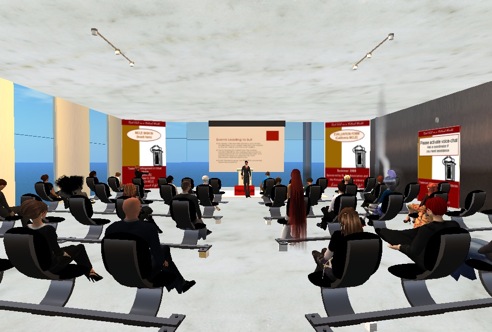
On September 9, 2008, I gave a presentation entitled “Trademark Infringement in Virtual Worlds” at the SL Bar Association in Second Life.” I gave an excerpt from the presentation the following day at a Bar Association of San Francisco program entitled “Hot Topics in Business & Technology Law.”
Trademark infringement is widespread in Second Life and costs retailers millions. Although the amount of money lost in virtual worlds is small in comparison to the entire retail market, brand owners that fail to “police” their marks by pursuing infringers may lose the ability to enforce their trademark rights in the future. The presentation discussed the basics of trademark law, the significance of the virtual worlds infringement problem, the reasons why increasing infringement and the passage of time may erode the value of a trademark, and what owners can do to combat infringement. For a copy of the slides from the presentation, click here.
Minsky v. Linden Research Update
09/09/2008 06:42 Filed in: Trademark | Intellectual Property
On July 29, 2008, artist and art critic Richard Minsky filed suit against against Linden Research, an avatar named Victor Vezina (named as a John Doe defendant), Linden Chairman Philip Rosedale, and former Chairman Mitch Kapor in Albany’s federal court. Mr. Minsky’s avatar in SL is ArtWorld Market, and he is attempting to enforce his SLART trademark used with his art magazine. He filed an amended complaint on August 14. I posted the court documents about the case on my Minsky v. Linden Research documents page. Mr. Minsky obtained a temporary restraining order against the defendants, prohibiting them from infringing on his mark. A hearing to determine if the court should issue a preliminary injunction will take place tomorrow. Read More...
Presentation on Trademark Infringement in Virtual Worlds
09/08/2008 15:39 Filed in: Trademark | Intellectual Property
I will be giving a talk in SL tomorrow on Trademark Infringement in Virtual Worlds before the SL Bar Association at its offices, noon PDT/SLT. You can register for the talk by going to the registration page. Read More...
Welcome to the 3D Internet Law Blog
08/31/2008 22:14 Filed in: General
It’s inevitable. We’re in the process of moving from a 2D Internet -- one like magazine pages, with maybe some video, audio, and animation -- to an immersive 3D Internet. You may have heard of the Second Life® virtual world, a service of Linden Lab in San Francisco. It’s the most prominent virtual world in use, but there are others -- There(sm) and Entropia Universe®. All of these virtual world Internet applications let users control on-screen characters, called “avatars,” that walk in and around what seem to be buildings, stroll by the lakeshore, fly through the air, and ride virtual vehicles. The technology powering these virtual worlds has a lot in common with multiuser online games, such as World of Warcraft®, EverQuest®, and City of Heroes/City of Villains®. Regardless, it is just a matter of time before business 3D Internet “sites” or applications are just as common as 2D websites.
With the adoption of the 3D Internet comes new legal issues -- and we’re just beginning to see what they are. For instance, do items of virtual “property” constitute legally-recognizable property, with rights and obligations that go along with property law? What happens when conduct in games or virtual worlds infringe -- or at least appear to infringe -- intellectual property rights? What governments or sets of courts have jurisdiction over behavior in 3D Internet applications? All of these legal questions, and many more still await definitive answers.
In the meantime, we have only limited legal precedents, statutory law, and regulations to guide companies hosting 3D applications, businesses establishing presences in virtual worlds, and users. The hosting companies have created their own private law by way of contract through their online “terms of service,” which they hope will be enforced in court. Public and private law, however, still leave many gaps, and many legal questions remain unanswered.
I welcome you to this website and blog. In these pages, I hope to fill in the gaps in the law, and provide some information and thoughts concerning the direction of the law.
Before I close my first blog here, I would like to thank Benjamin Duranske, the author of a terrific new book entitled Virtual Law, for his foresight in creating his blog, Virtually Blind, and essentially pioneering a new practice area for lawyers -- virtual law. In fact, he wrote a fantastic book on the subject, called Virtual Law. He also had a forceful op-ed piece in the Wall Street Journal recently, calling on the mainstream media to recognize the advent of the 3D Internet. Ben, and two other pioneers, Sean Kane and Cristina Burbach are doing a great job with their Virtual Worlds and Multiuser Online Games Committee of the American Bar Association Section of Science and Technology Law. I thank them all for their enthusiasm and service to the Section.
Steve Wu
August 31, 2008
With the adoption of the 3D Internet comes new legal issues -- and we’re just beginning to see what they are. For instance, do items of virtual “property” constitute legally-recognizable property, with rights and obligations that go along with property law? What happens when conduct in games or virtual worlds infringe -- or at least appear to infringe -- intellectual property rights? What governments or sets of courts have jurisdiction over behavior in 3D Internet applications? All of these legal questions, and many more still await definitive answers.
In the meantime, we have only limited legal precedents, statutory law, and regulations to guide companies hosting 3D applications, businesses establishing presences in virtual worlds, and users. The hosting companies have created their own private law by way of contract through their online “terms of service,” which they hope will be enforced in court. Public and private law, however, still leave many gaps, and many legal questions remain unanswered.
I welcome you to this website and blog. In these pages, I hope to fill in the gaps in the law, and provide some information and thoughts concerning the direction of the law.
Before I close my first blog here, I would like to thank Benjamin Duranske, the author of a terrific new book entitled Virtual Law, for his foresight in creating his blog, Virtually Blind, and essentially pioneering a new practice area for lawyers -- virtual law. In fact, he wrote a fantastic book on the subject, called Virtual Law. He also had a forceful op-ed piece in the Wall Street Journal recently, calling on the mainstream media to recognize the advent of the 3D Internet. Ben, and two other pioneers, Sean Kane and Cristina Burbach are doing a great job with their Virtual Worlds and Multiuser Online Games Committee of the American Bar Association Section of Science and Technology Law. I thank them all for their enthusiasm and service to the Section.
Steve Wu
August 31, 2008